
Raipur July 07, 2026/ For decades, Abujhmad, known for its dense forests, geographical isolation and prolonged Naxalism has remained one of India’s least accessible forest regions. Under Chief Minister Shri Vishnu Deo Sai led- Chhattisgarh government’s focus on expanding livelihood opportunities in remote tribal areas, the region has witnessed new development initiatives. One such initiative is exploring whether coffee cultivation can become part of Abujhmad’s economic future.
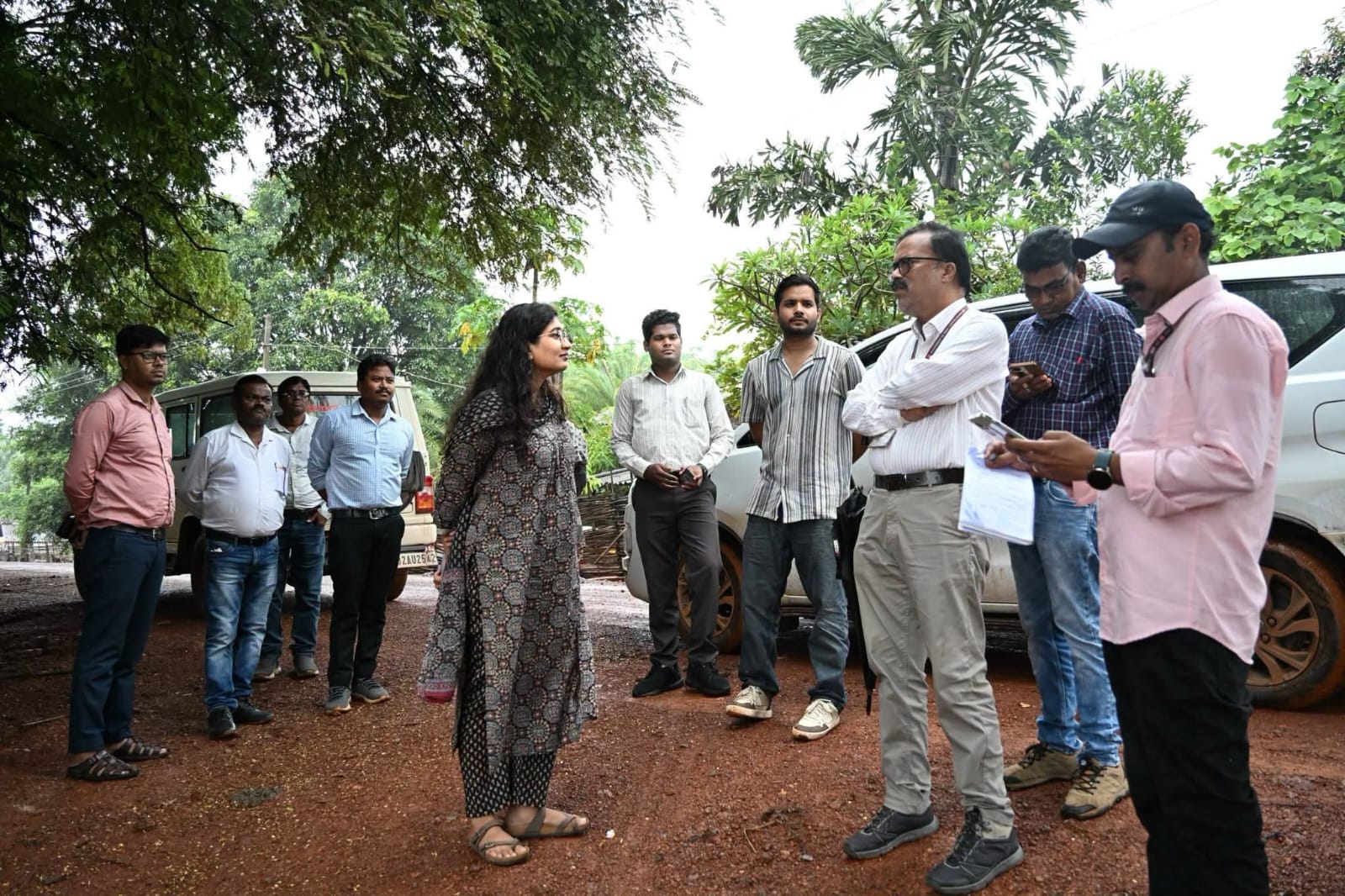
The Narayanpur district administration has initiated preparations to introduce coffee cultivation in selected forest villages of Abujhmad, with the twin objectives of improving rural livelihoods and promoting environmentally sustainable agriculture. As part of the exercise, District Collector Smt. Namrata Jain, accompanied by experts from the Coffee Board of India, recently inspected villages including Kutul, Kachchapal, Kodliyar, Irakbhatti and Toke to assess their suitability for coffee cultivation.
The expert team carried out field-level observations of the region’s climate, annual rainfall, temperature, soil characteristics and elevation. According to the administration, the Coffee Board concluded that Abujhmad possesses favourable natural conditions for developing a coffee-based agroforestry model. The Coffee Board of India will continue to provide technical guidance on site selection, nursery development, plantation management, capacity building and other technical aspects as the project moves forward in phases. Initial work will focus on identifying suitable land and establishing nurseries before plantations are taken up.
Abujhmad lies in the Bastar region, one of India’s richest forest landscapes and home to diverse tribal communities. The regions extensive forest cover, varied topography and favourable agro-climatic conditions have long attracted scientific interest. A technical bulletin titled “Coffee in Chhattisgarh”, published by the College of Horticulture and Research Station, Jagdalpur, under Indira Gandhi Krishi Vishwavidyalaya (IGKV), identifies Bastar as a promising organic coffee-growing region. Based on coffee cultivation experiments conducted at Darbha, the bulletin notes that the region’s rainfall, elevation, fertile forest soils and shaded landscape closely match the conditions required for successful coffee cultivation under a two-tier forest canopy.
The bulletin also highlights the environmental benefits of coffee-based agroforestry. Shade trees help conserve soil, recycle nutrients through leaf litter, reduce erosion, support biodiversity and protect coffee plants from extreme weather conditions. It further notes that traditional farming practices, including the use of organic manure and manual field management, strengthen the region’s potential for sustainable coffee cultivation.
The administration believes the project can create a new source of employment and income for local communities in Abujhmad. Commercial production is expected to begin after about four years, after which coffee can provide recurring income over many years. Besides cultivation, the initiative is expected to generate opportunities in nursery development, plantation management, maintenance, harvesting and other allied activities, with local Self-Help Groups and rural communities playing a central role.